
The younger man had hair that grew like a forest. He looked rather disheveled, his thick curls spreading like untamed foliage, begging to be trimmed.
“My next article is going to be about your hair,” I said.
“Looks like you’ve really run out of ideas,” he commented.
I managed to take a picture and send it to my mother. Grandma is usually very particular about the young man’s hair being in perfect shape.
My boy may have snapped back, but my remark had an impact. He went for a haircut and later sent me a photo of his new look right from the salon.
I’m sharing this little story to make a point about how much has changed over time, including the art of photography. Could we have played such silly games with before-and-after haircut photos while growing up? Heaven bless! Photography was far too expensive.
The rolls we knew: a recap of traditional film-photography
Some time in the early 1990’s, we were at a get-together when a friend moved around taking pictures. Many of us started teasing him with the same question: “Are we going to see the photos?” It so happened that at the previous party, he had volunteered to be the cameraman, not realizing until the next day that he had forgotten to load a roll into the camera.
The number of photos one could take did not depend on the camera, but rather on the film roll loaded into it. We were familiar with rolls that allowed either 24 or 36 shots. Once the roll was used up, could we view the photos immediately? Of course not! The film had to be taken to a photo lab and developed so that the invisible images could be turned into visible ones. Along with the printed photos came a black strip called the negatives which could be used to make more copies later.
In a nutshell, photography was not a cheap affair, so pictures were not taken carelessly or in abundance. Each shot was considered worth saving.
Think about the scenario today.
Traditional photography is a forgotten tale for many. Smartphones have taken over everything, including digital cameras, which became popular in the late 1990’s and 2000’s thanks to their electronic technology. We now take pictures with our phones, check them immediately, delete the ones that do not meet our expectations, and then retake them.
According to a survey by Max Spielmann, ninety percent of daily informal photos are captured by smartphones due to the convenience of always having a camera on hand for everyday moments.
Pre and post smartphones
I have witnessed all of the changes over the years: from traditional photography to the digital phase to the era of smart phones becoming the order of the day. I have seen the progress from the black and white photos to the colored ones that have defined our moments.
It has been a long journey from counting all of the photos of the year on our finger tips. We are now in an age so defined by having a camera with us at all times that we take pictures even of the most trivial moments. As a result, we end up with a massive storage of photographs.
Can we pull out the best ones from the collection in a zap? It does not seem to be an easy task. Unless someone is particularly systematic about organizing them, we often forget that we’ve even taken those pictures. So when we do try to find them, they are buried somewhere in the endless gallery scroll.
When every photo mattered
Before smartphones, we had fewer photos, but they felt more precious because we saved them for our most iconic occasions and events. That scarcity made us value them more. Almost every household would preserve those photos with utmost care.
In old-fashioned albums in my parents’ home are photographs from different times. Obviously, not every event was captured, yet the few snapshots that we do have take us down memory lane, helping us relive those days once again. Encapsulated in those pieces of paper are our childhood memories and all the blissful milestones of a life colored by unfiltered joy.
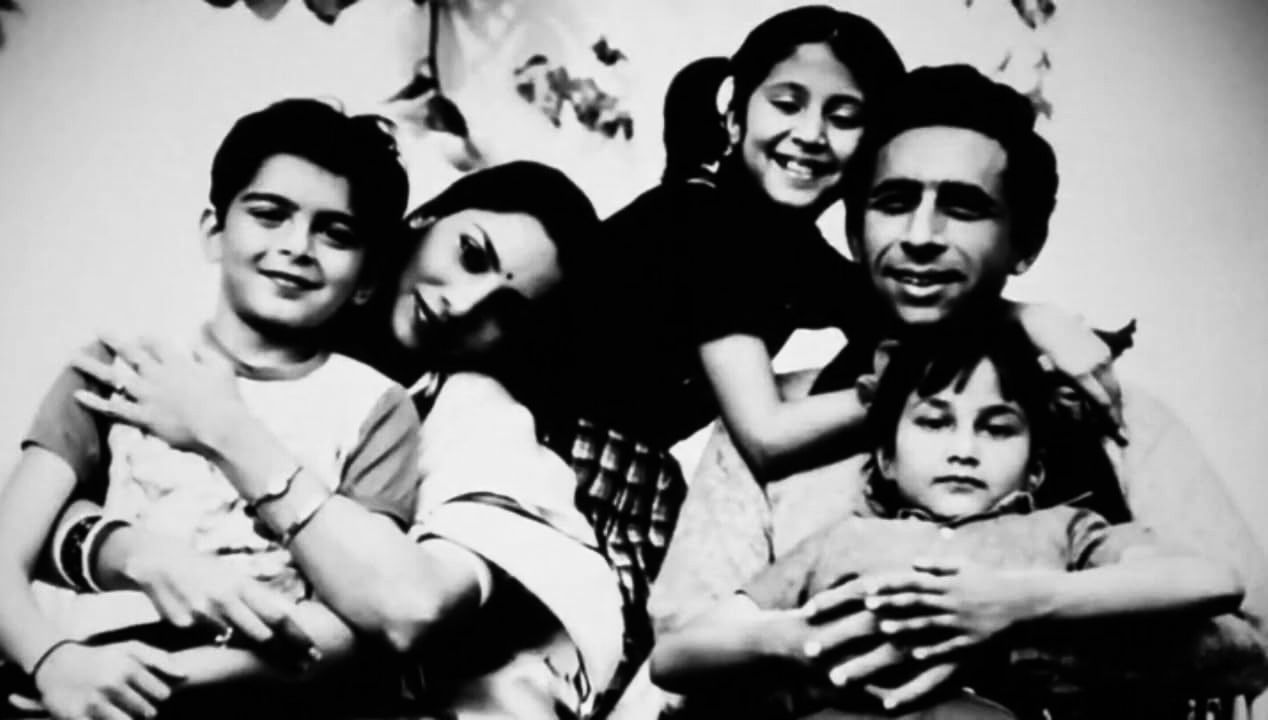
For whatever reason, the black-and-white ones hold a special appeal. There is something organic about them, unpolished and radiating an authenticity that is quietly enduring. And as we turn the pages of those albums, we are reminded of the chapters in our lives which, in spite of their simplicity, allowed us to freeze the magical moments with gentle warmth.

 rashmi writes