
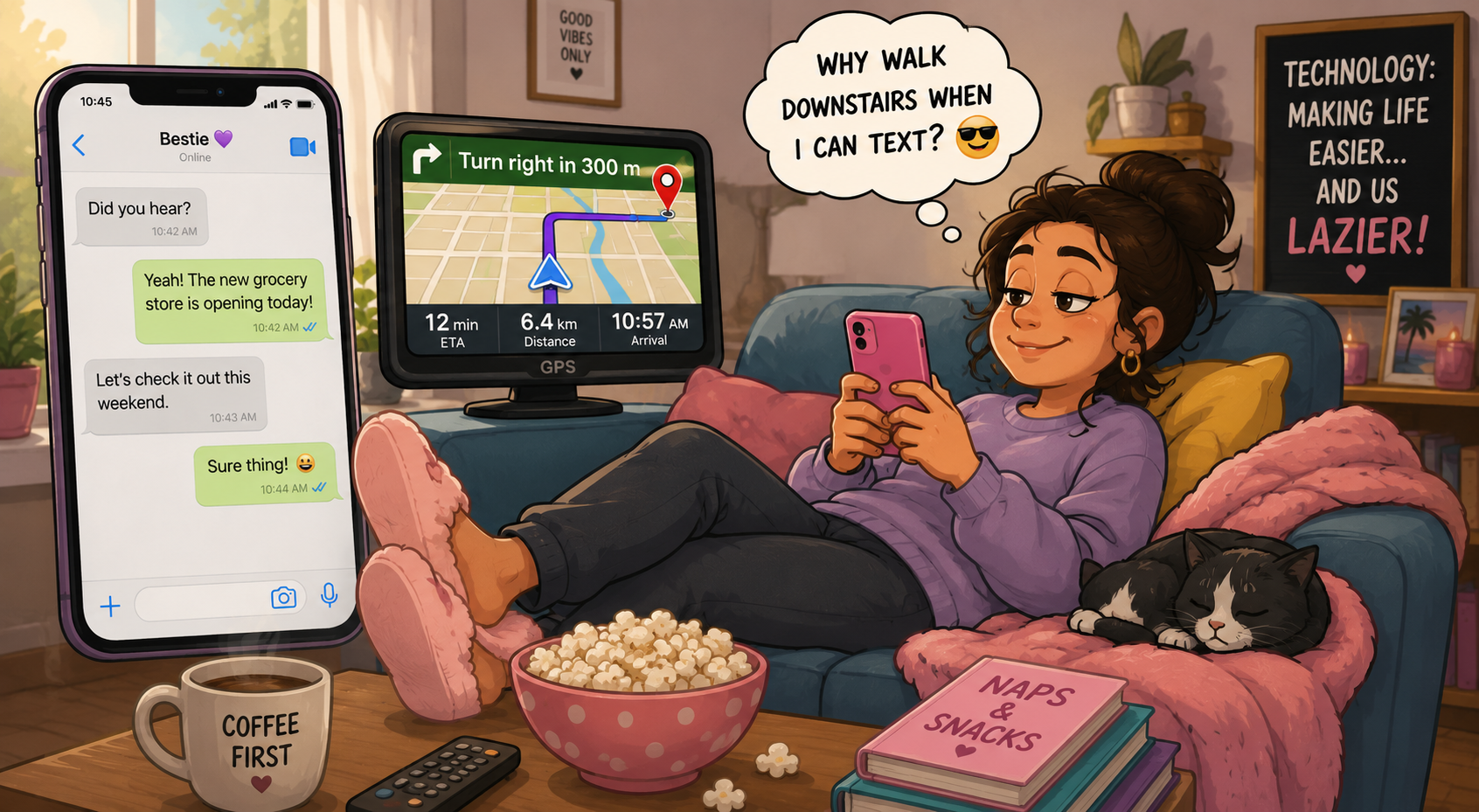
For precisely ten minutes, we texted back and forth about one of our favorite grocery chains opening a store near our home. The strange part was that we were in the same house, just on different floors. I had started the conversation, and instead of simply walking down a flight of stairs to talk in person, I chose to send a message.
It wasn’t as though I was busy or occupied with something important. I had naturally chosen the easier route simply because the cell phone was at my disposal. Honestly speaking, it was not merely because something was readily available; it was plain laziness disguised as convenience.
I am guilty as charged, but I am certainly not alone. An overwhelming majority of us have grown overly dependent on gizmos and gadgets to simplify our lives. We have conditioned ourselves to rely on technology in almost every aspect of life, be it in our homes, workplaces, social interactions, or day-to-day activities.
Where do the roads lead?
It has been a long time since we graduated from reading maps during road trips. These days, the GPS is at our service, helping us find routes to our destinations. As helpful as it is, we have become far too dependent on this technology to the point that our approach to navigation has become almost mechanical. Many of us rely on it automatically even when traveling to places we have visited countless times before.
My father drove until a very late age and depended solely on his cognitive abilities to figure out locations. Such stories are extremely rare these days. Instead of actively remembering routes or paying attention to our surroundings, we often surrender our sense of direction to technology without a second thought.
How wonderful it was to hear those hellos!
A phone call from a loved one has always felt far warmer and more welcoming than a text message. There is a personal touch in hearing someone’s voice that typed words can never truly replace. Those of us born in the late sixties or earlier grew up with that form of communication. Whenever we wanted to check on someone living far away, we would instinctively pick up the phone and call.
However, most people these days resort to text messages instead. It is true that life has become busier, but with instant messaging so readily available, many of us no longer make the effort to call. In the process, communication has become quicker yet far less personal.
Human relationships at the mercy of technology
A conversation with someone much younger revealed an interesting perspective: today’s generation often seeks instant gratification. Relationships are approached with far less patience than they truly require, and technology frequently becomes the villain in the process.
At the slightest disagreement, many youngsters react impulsively. Instead of meeting in person and resolving differences calmly, they lash out through text messages. Misinterpreted words, tones, or even emojis often lead to misunderstandings, making situations far worse than they need to be.
Artificial Intelligence: the most talked-about newcomer to humanity
The world today can scarcely function without artificial intelligence. AI has woven itself into almost every aspect of modern life. Like any other technology, when used wisely and for the right reasons, it has the power to create wonders and transform lives for the better.
On the other hand, it is immensely troubling when hard work and sincerity go for a toss and laziness takes over. In recent times, what has been witnessed is a growing tendency of some individuals to use AI to produce creative works and present them as their own, blurring the line between originality and imitation.
With everything said, let us be realistic
If we are talking about progress, living without technology is no longer an option. The question simply does not arise. We need to keep pace with the rapid changes taking place around us. However, while embracing technology, we must also ensure that it does not replace human effort, creativity, and genuine human connection. Technology should remain a tool that serves humanity; it must not become something that slowly takes control of the way we think and live.


