
Sitting in the dimly lit, beautifully decorated Middle Eastern restaurant, I relished every bite of warm pita bread generously coated with creamy hummus. Not only was this flavorful spread delicious, but it was healthy too. Thanks to the chickpeas, lemon juice, tahini, and olive oil used to make it, we get essential protein, fiber, healthy fats, vitamins, and minerals from this delectable dish.
No wonder Israel and Lebanon found themselves in a lighthearted culinary rivalry known as the “Hummus Wars”. Each country laid claim to this beloved Middle Eastern staple, celebrating it as an integral part of its culinary heritage.
This friendly competition even made its way into the Guinness World Records, as both nations vied to create the world’s largest bowl of hummus. In 2010, Lebanon claimed the record with a colossal serving weighing more than 10,000 kilograms (over 22,000 pounds), surpassing Israel’s previous record. The Guinness competition had a record-holder, but it did not settle the larger question of the dish’s origins.
A World of Delicious Disputes!
Israel and Lebanon are not the only participants in food wars. The battles for culinary bragging rights are surprisingly common, and here’s a peek at a few of them:
- No fast food meal feels complete without a side of French fries. But behind this universally loved snack lies a long-running debate between France and Belgium over its origins. Despite its name, many food historians believe the humble fried potato was likely born in Belgium while France played a major role in popularizing it.
- The meringue-based dessert pavlova has sparked a long-standing rivalry between Australia and New Zealand over who created it first. Interestingly, this sweet delicacy is believed to have been created in honor of the Russian ballerina Anna Pavlova during or after one of her tours to the two countries in the 1920’s.
- Who owns this famous drink pisco? The two South American nations of Peru and Chile have long debated the name and origins of this grape-based spirit that both consider an important part of their national identity. Each country has its own traditions and regulations surrounding the drink, adding fuel to this spirited rivalry.
- If you are looking for an aromatic biryani with long, fluffy, separate grains, basmati rice is the answer. This fragrant grain, traditionally associated with the Indian subcontinent, is proudly claimed as part of the culinary heritage of both India and Pakistan. The debate over its origins and identity is complex but perhaps best left outside the kitchen!
Whose Dish Is It Anyway?
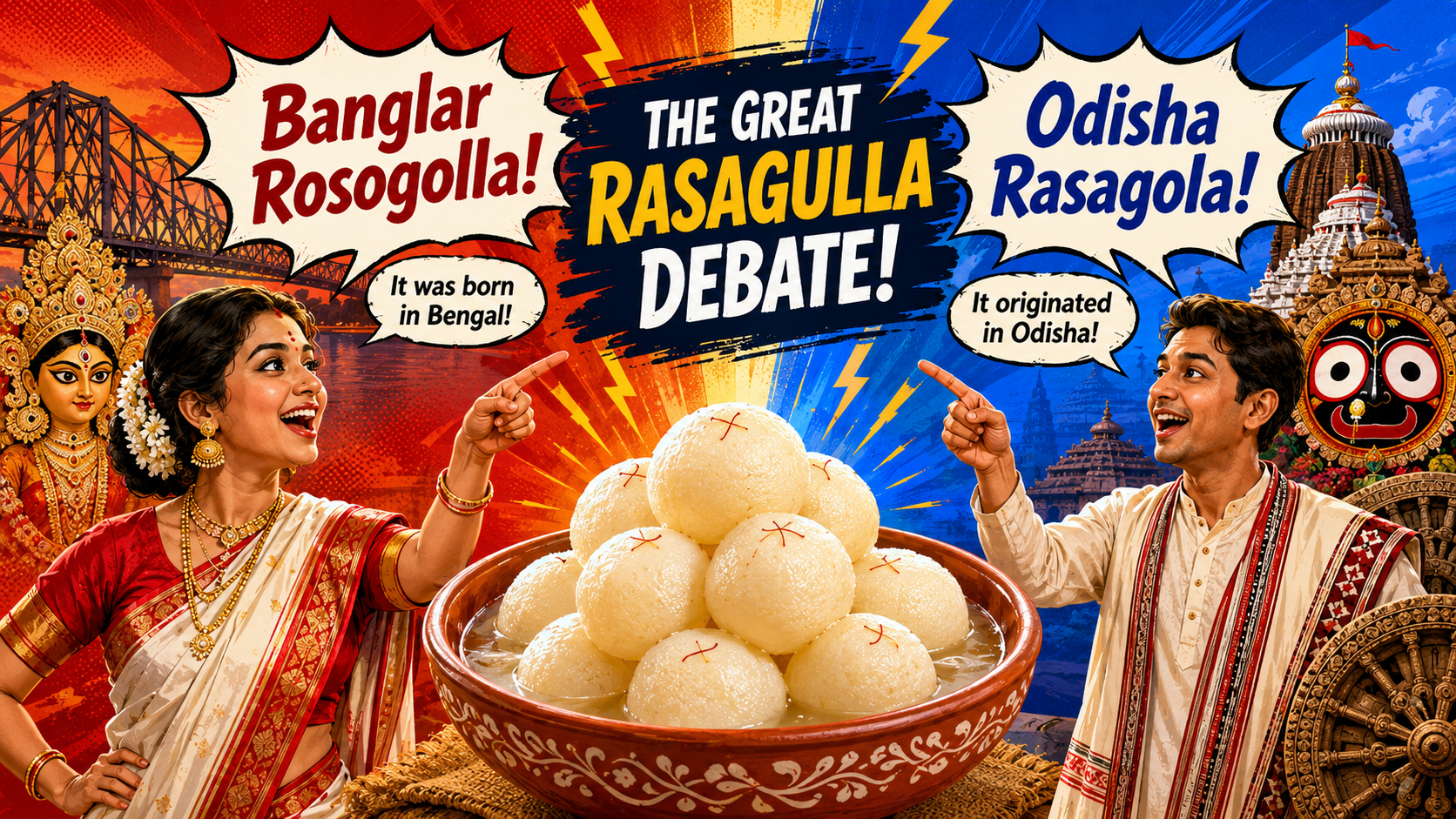
The tug-of-war over food ownership has taken place not only across international borders but also among states within a nation. For the uninitiated, the rasgulla is a delicate, spongy ball of chhena (a fresh cheese made by curdling milk) soaked in fragrant sugar syrup. It is a beloved dessert that has sparked passionate culinary debates in India.
West Bengal and Odisha have long debated its origins, with each state claiming the iconic sweet as part of its culinary heritage. In 2017, West Bengal received a Geographical Indication (GI) tag for Banglar rosogolla while Odisha was awarded a separate GI tag in 2019 for Odisha rasagola. Rather than declaring a single winner, the two GI tags recognize that each state has its own distinct version and tradition of this beloved dessert.
Yet another controversy involving the humble rasgulla stirred the pot!
Early in May this year, a post on X sent eyeballs rolling when a user responding to a discussion about Bengali sweets described the rasgulla as “nothing but an idli dipped in sugar syrup” and called it “the most overrated dessert.”
Writer and parliamentarian Shashi Tharoor responded in one of the most creative ways possible. In his characteristically eloquent style, he wrote: “To conflate a Rasgulla with an Idli is not just a culinary error; it is a profound cosmological misunderstanding.”
Explaining what truly distinguishes the two foods, he ended his post with unmistakable wit and a request that could hardly have been more fitting:
“To suggest an Idli would even consent to being drowned in sugar syrup is to fundamentally misunderstand its dignity. If this lady finds Rasgullas overrated, argue that on the merits of their sponginess or sweetness. But please leave the noble, perfectly fermented, steamed majesty of the Idli out of your dessert-table polemics, ma’am!”
And my two cents!
The idli and the rasgulla have happily coexisted for generations. Let’s leave them in the culinary territories that they proudly belong to and celebrate each for their own delicious identity. And as I pen these lines, with the sweltering July heat outside, I reflect: when a humble rasgulla paired with cool, creamy dahi (yogurt) can bring such soothing refreshment and satisfaction on a summer day, why waste time debating its worth?
After all, food is meant to be celebrated, not debated.


1 Comment