
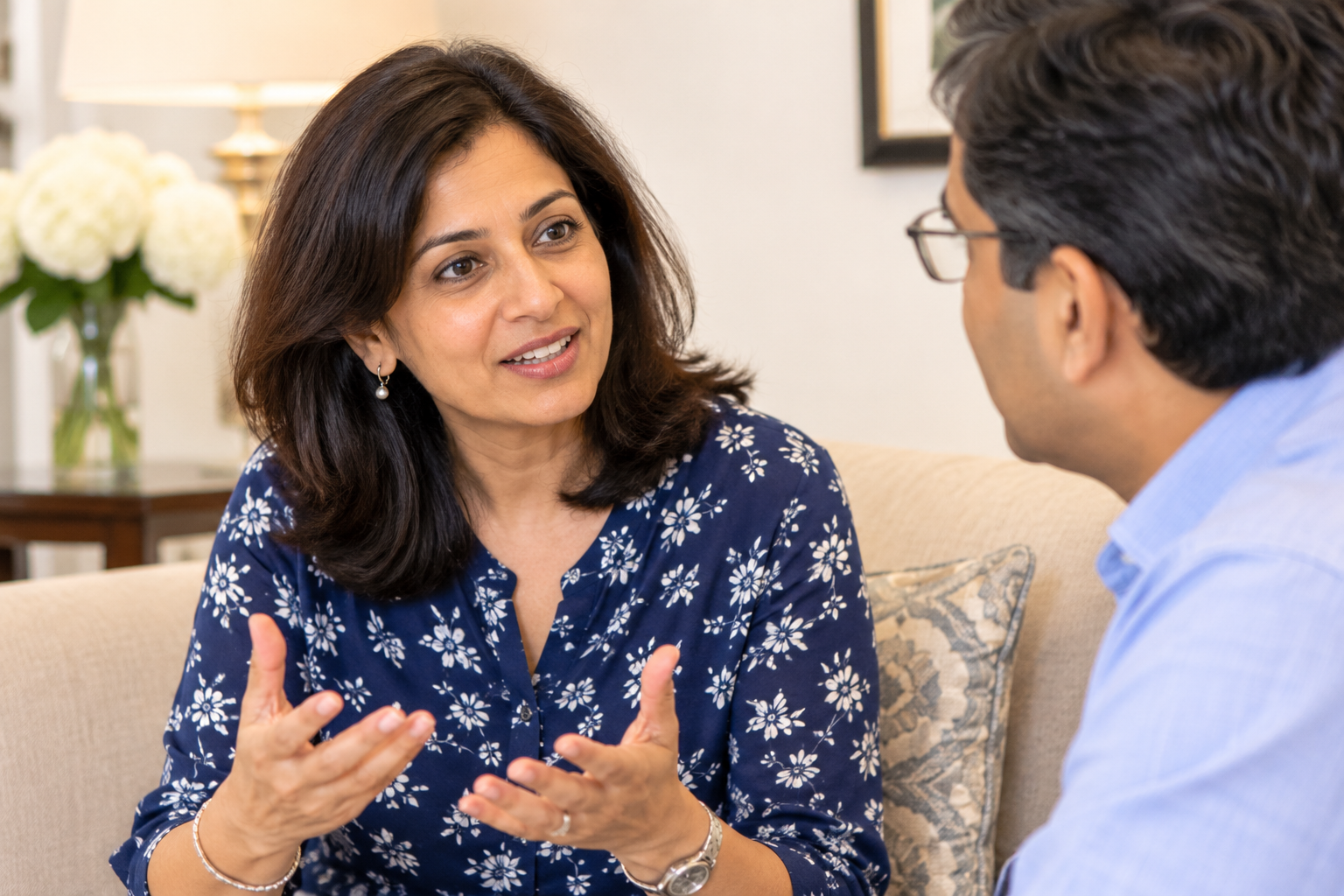
A thought-provoking video shared by a close friend on his YouTube channel raised a question that had never quite crossed my mind. He brought up the subject of whether we have lost the art of conversation. It was certainly something worth pondering.
But we do communicate a lot these days, don’t we?
There is no denying that communication has become much easier in today’s world. Texting, emailing, or making a quick video call can be quite a breeze. We exchange messages, share updates, respond to questions, and remain connected with people. However, there is something missing in this equation. There may have been times when you sat down with someone to talk, only to find yourself constantly checking your phone, glancing at the time, or letting your mind wander. Your attention is elsewhere, rather than on the person sitting right in front of you.
Constant communication in our day-to-day lives does not guarantee that we will ace the art of talking. We are constantly in touch with people, yet we may not always be connecting with them. What we are gradually losing in our increasingly digital world is the ability to engage in meaningful conversations.
There are always exceptions. You may not experience this situation with people you meet frequently. But what about meeting someone you knew very well but haven’t seen in ages or haven’t been in regular contact with?
Do you have enough to say?
You may find yourself sitting down for a chat, exchanging a few pleasantries, only to suddenly run out of things to say.
An awkward pause follows. You feel you have spoken enough, and perhaps the other person feels the same way. Before long, the conversation comes to a natural or sometimes rather unnatural halt.
We tend to overthink what to say, whether it will interest the other person, or whether we might sound intrusive. We wait for the other person to bring up a subject, ask a question, or take the initiative. And when neither does, silence takes over.
So where do you stand?
Letting things flow naturally is the key. A conversation does not need to be scripted. It need not begin with an interesting topic or a clever opening line. Sometimes, a simple question about someone’s day, an inquiry about their family, or a recent holiday can open the door. One thought leads to another, and before you realize it, an hour has passed and we have taken so much from the chat.
What matters is not necessarily what you ask but rather how genuinely interested you are in the response. It is about sharing thoughts, exchanging experiences, recalling memories, laughing over little things, and sometimes even disagreeing without feeling the need to prove a point.
The art lies in listening as much as speaking. Give the other person a patient ear. Show an interest in what is happening in their life without, of course, becoming nosy. Allow them to speak without constantly interrupting or turning every subject back to yourself. A little curiosity, coupled with genuine interest, can take a conversation in unexpected directions.
A reunion, a reflection!
Family, friends, fun, food, and festivities all came together to bring heaps of joy. It was my niece’s wedding in India three weeks ago and also the perfect occasion to reconnect with familiar faces and meet new ones.
I met a cousin whom I had not seen in over 29 years. We had never lost touch, but to be honest, our communication had not been very frequent.
So much had changed over the years, yet when we finally came face to face, there wasn’t the slightest hint of awkwardness. We reminisced about our happy times and picked up comfortably right where we had left off. The feeling was mutual, and neither of us even paused to wonder whether we would have enough to talk about after such a long gap.
This experience drove home an interesting point: perhaps we never really lose the art of conversation. Instead, we create mental barriers without even realising it. We convince ourselves that there will be hardly anything to talk about or that we might struggle to keep a conversation going.
But once we shed these inhibitions and take that first step, the barriers begin to disappear, and the lines of communication open up naturally.
Don’t wait for a conversation to happen; make one happen
One of the biggest mistakes we make is waiting for the other person to initiate a conversation. Why should the responsibility always rest with someone else? If you have something to share, share it. If you are curious about something, ask. If someone crosses your mind, pick up the phone and call rather than waiting for them to make the first move.
After all, genuine exchanges don’t always happen spontaneously. Sometimes they need a little effort to get started. Conversation is a two-way street, and we cannot always expect someone else to build the bridge. Sometimes we need to take the first step ourselves.
(This article was inspired by Dr. Ardain Isma’s YouTube video: Are We Losing the Art of Conversation?)


